Low testosterone
Testosterone deficiency and hypogonadism

As the primary male hormone, testosterone influences men’s physical and mental health.
A testosterone imbalance can lead to various conditions. Causes of testosterone deficiency may include genetic defects or predispositions, medical conditions (such as diabetes), certain medications, advancing age, or the use of specific drugs.
This deficiency can manifest itself through various symptoms, including fatigue, reduced sexual desire, erectile dysfunction, listlessness, reduced muscle mass and bone strength, weakness, muscle wasting, lack of drive, sleep disturbances, depressive mood, mood swings, memory problems, as well as unwanted weight gain and breast tenderness.
Hypogonadism
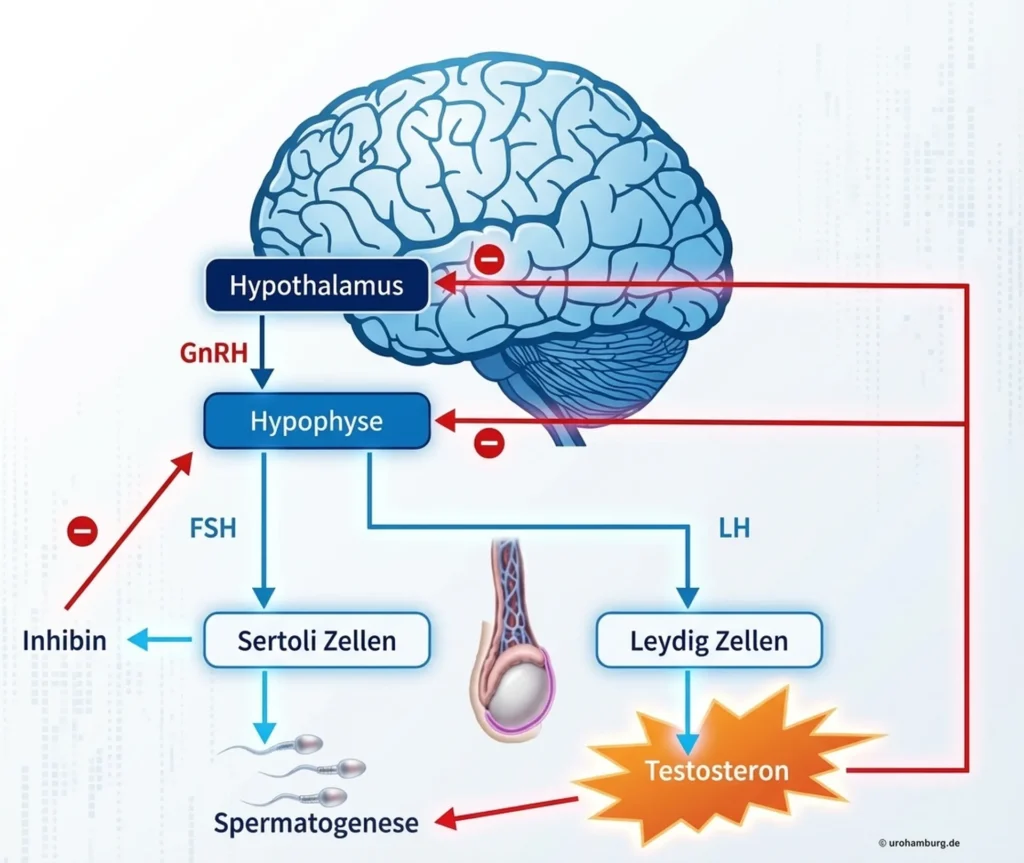
Endocrine dysfunction of the gonads (sex glands):
- Primary hypogonadism: The problem lies within the gonads. The production of sex hormones is impaired directly at the source.
- Secondary hypogonadism: The problem lies in the brain, either in the pituitary gland or the hypothalamus. Signalling from the brain to the gonads is impaired.
- Tertiary hypogonadism: The problem lies in the hypothalamus in the brain. The release of gonadotropin-releasing hormone (GnRH) is impaired.
Hypergonadism & Oestrogen

On the other hand, there is hypergonadism, a condition in which too much testosterone is produced. This can be caused by tumours, genetic abnormalities or hormonal disorders. Symptoms may include increased body hair, hair loss, acne, changes in the voice and others.
The interaction between testosterone and oestrogen is important in both conditions, as an imbalance can have significant consequences. Individual hormone testing enables a precise diagnosis and the development of a tailored treatment plan to restore hormonal balance.
Testosterone and oestrogen are two key hormones that maintain a complex balance in the male body. A testosterone deficiency can not only lead to the symptoms already mentioned, but also disrupt the oestrogen-testosterone balance. This hormonal dysregulation can cause additional symptoms such as mood swings, hot flushes and sleep disturbances.
Testosterone is partially converted into oestrogen, and an imbalance in this ratio can have significant consequences. Individual hormone testing allows us not only to check testosterone levels but also to analyse the ratio to oestrogen. This holistic approach enables a precise diagnosis and the development of a tailored treatment plan.
How do we proceed?
Comprehensive consultation and assessment for hormonal disorders in men
Diagnosis using ultrasound and hormone tests
Blood test and comprehensive laboratory analysis
Personalised substitution therapy and treatment plans
If a testosterone deficiency is confirmed, we will initiate a personalised replacement therapy. Based on the diagnostic results, we draw up tailored treatment plans to normalise hormone levels and alleviate symptoms.
Comprehensive laboratory analysis
Our comprehensive laboratory analysis covers not only the measurement of hormone levels, but also a range of other important parameters. These include blood sugar levels to identify diabetes or prediabetic conditions, lipid profiles to assess cardiovascular risk, liver and kidney function tests, as well as inflammatory markers and, where appropriate, the measurement of key vitamins (D, B12, B6).
Hormone replacement therapy, lifestyle changes and long-term care
Following a thorough diagnosis, we focus on personalised hormone replacement therapy that not only addresses testosterone deficiency but also restores the balance with oestrogen. At the same time, we take any underlying conditions into account and develop comprehensive treatment plans. Emphasising a healthy lifestyle, including regular exercise and a balanced diet, is an integral part of our therapeutic approach. Open communication and long-term support ensure that treatment is optimally tailored and lead to a lasting improvement in quality of life.
Would you like to get tested?
If you are interested in having your hormone levels assessed, please feel free to book an appointment for a detailed consultation and personalised treatment plan at my practice. We would, of course, be happy to draw up a treatment and cost plan for you, which you can submit to your private health insurance provider.
Book an appointment