Benign prostatic hyperplasia (BPH) & prostate problems
Modern diagnostics and personalised treatment for a better quality of life.
As men get older, many find that their prostate starts to cause problems. Sometimes, symptoms can even appear at a younger age.
Benign prostatic hyperplasia (BPH) is a natural part of the ageing process, but it can significantly affect your quality of life.
At our practice, we offer precise diagnostics and state-of-the-art treatment methods to effectively alleviate your symptoms.
What happens when the prostate becomes enlarged?
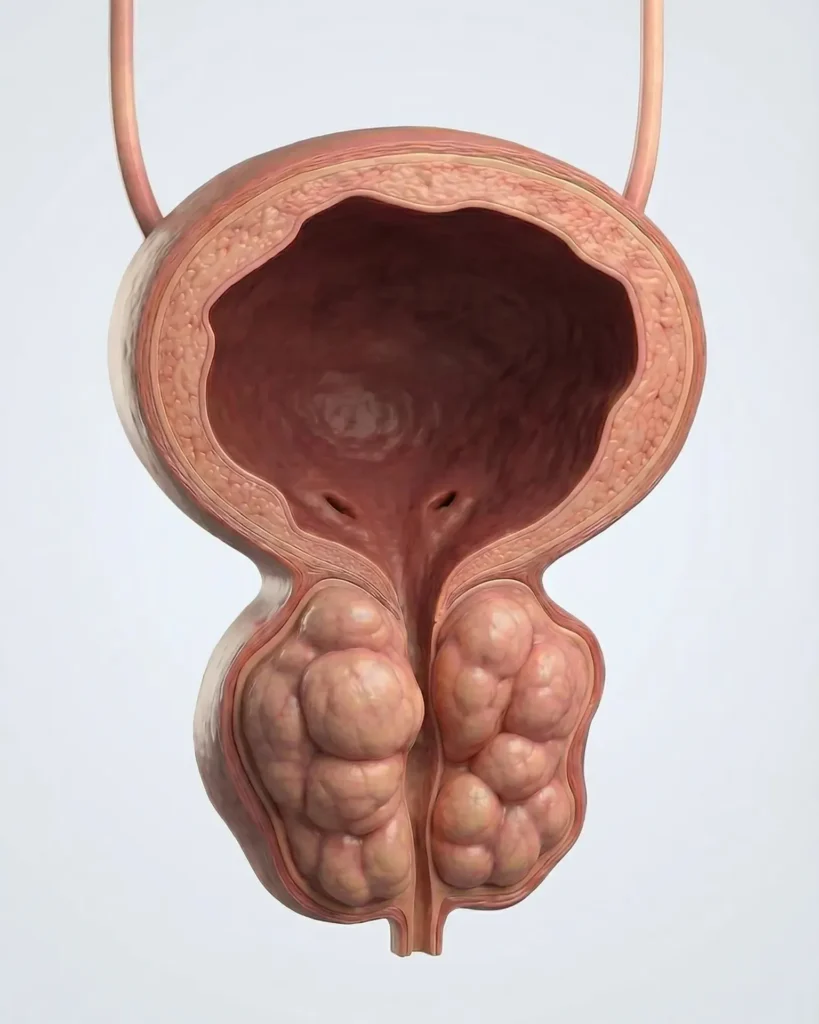
The prostate surrounds the urethra like a cuff. As the tissue grows over the years, it can increasingly constrict the urethra. When urinating, the bladder has to work against greater resistance. This causes the bladder muscle to thicken initially and later become fatigued – leading to the typical problems with urination and bladder control.
The exact causes of BPH are not yet fully understood, but age, hereditary factors and the male sex hormone testosterone play a decisive role. Important: BPH is not prostate cancer and does not increase the risk of developing it.
Typische Beschwerden (LUTS)
Frequent urge to urinate (nocturia)
You find yourself needing to go to the toilet unusually often during the day and are also woken up several times at night by the urge to urinate. This disrupts your sleep.
Weak urine stream
The urine stream is noticeably weaker than it used to be. Urination takes longer and sometimes requires straining or effort.
feeling of residual urine
After going to the toilet, there is an unpleasant feeling that the bladder has not been completely emptied.
Delayed start & after-dripping
It takes a moment for the urine to start flowing. After urinating, there is uncontrolled dripping.
Check your symptoms
To what extent do your symptoms affect your daily life? Use our scientifically validated IPSS calculator for an initial self-assessment.
Accurate diagnosis – the first step towards recovery
To rule out other conditions and objectively assess the severity of your symptoms, we carry out a comprehensive, pain-free diagnostic assessment:
Detailed medical history & IPSS assessment: We will discuss your symptoms and assess your symptom score.
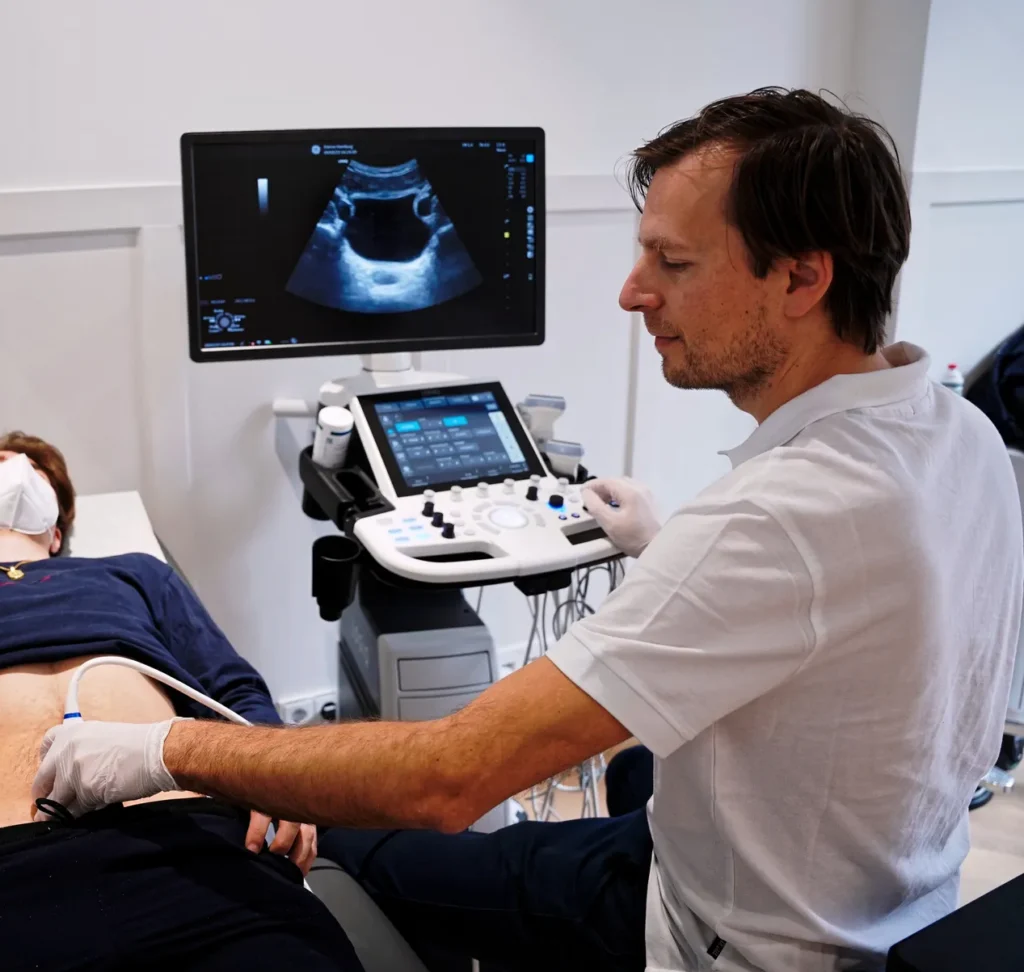
Ultrasound (sonography): High-resolution imaging of the kidneys, bladder and prostate to determine prostate volume and measure residual urine in the bladder.
Urine flow measurement (uroflowmetry): A painless electronic measurement of urine flow rate that indicates the degree of narrowing in the urethra.
Laboratory tests: Urinalysis (to rule out inflammation), as well as assessment of kidney function and measurement of prostate-specific antigen (PSA) and free PSA (fPSA) for cancer screening.
Digital rectal examination (DRE): Now rarely necessary. A physical examination of the prostate to assess its size, shape and texture.
Tailored treatment options
Conservative treatment (‘watchful waiting’)
In cases of mild symptoms, active monitoring is often sufficient. In addition, herbal remedies (phytotherapy, e.g. pumpkin seed or saw palmetto extracts) and lifestyle changes (fluid intake, pelvic floor exercises) can provide relief.
Pharmacological therapy
For mild symptoms, we prescribe medication. Alpha-blockers relax the muscles of the prostate and the bladder outlet and often improve the urine stream within a few days. A PDE-5 inhibitor (tadalafil) is highly effective for urinary urgency.
Modern surgical and minimally invasive procedures
If medication is not sufficient or complications arise (such as urinary retention or bladder stones), we will discuss surgical options. In addition to the gold standard procedure of transurethral resection of the prostate (TUR-P), we will provide you with detailed advice on modern, minimally invasive alternatives (such as laser therapies or steam ablation), which reduce the size of the tissue in a particularly gentle manner.
Regain your quality of life.
Difficulty urinating does not have to be an inevitable part of ageing. Book an appointment for a discreet and comprehensive assessment.
Appointment for an assessment of prostate problems