Urological screening
Personalised prevention and action recommendations
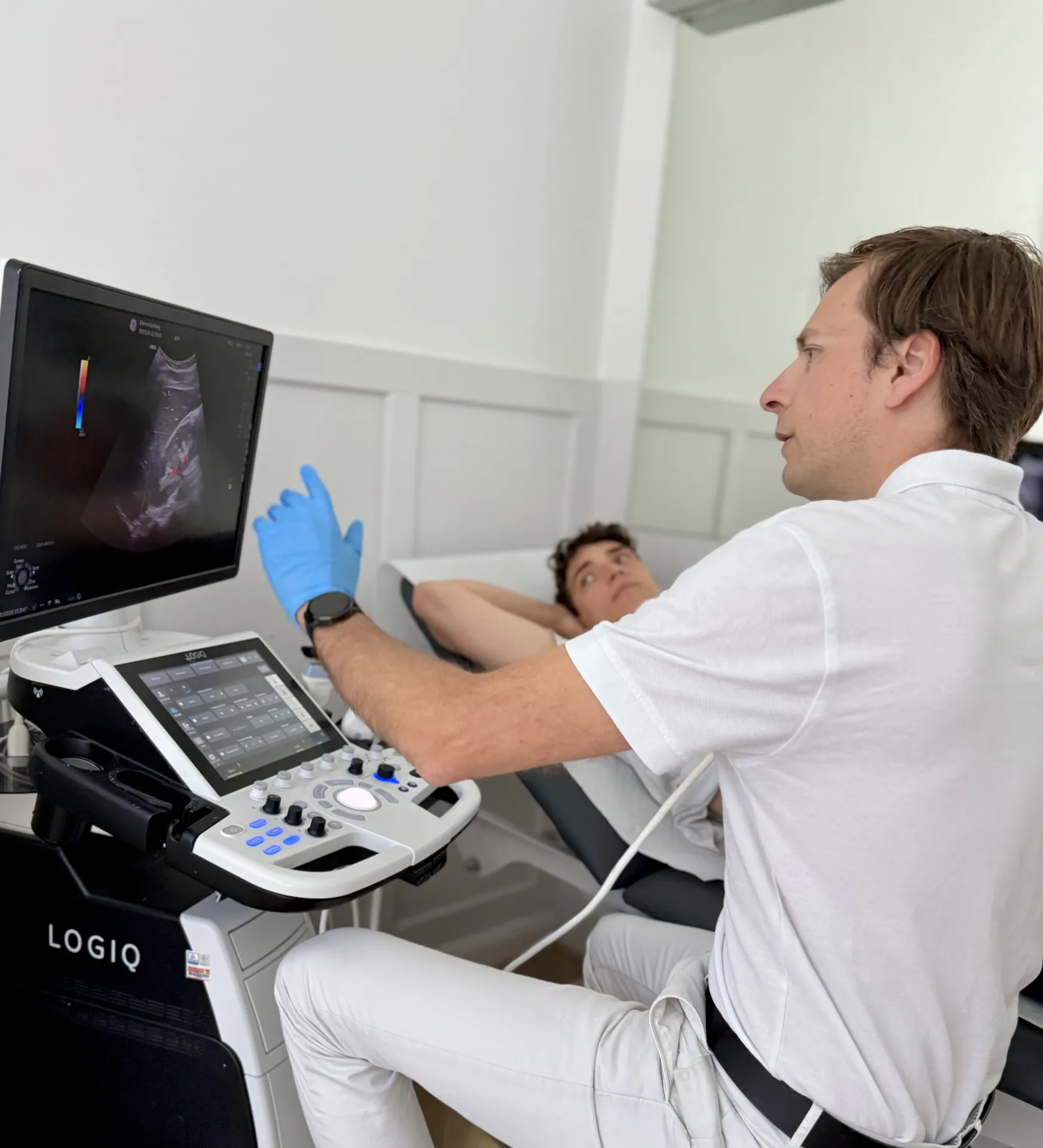
Tailored screening programmes for prostate, testicular and bladder conditions – based on many years of clinical experience, state-of-the-art diagnostics and personalised, trustworthy care. Depending on your age and family risk factors, the screening tests are specifically tailored to your needs.
Informieren Sie sich im Folgenden über unsere einzelnen Vorsorgeangebote im Detail.
Prostate cancer screening
Testicular cancer screening
bladder cancer screening
An overview of the most important screening tests
Prostate
Prostate cancer is the most common cancer in men and, in many cases, develops slowly and initially without causing any symptoms.
Regular urological screening is therefore recommended from the age of 45.
Screening involves a physical examination, a blood test to measure PSA levels, and an ultrasound scan of the prostate to determine a well-founded assessment of the individual’s risk profile.
Bladder
Bladder cancer often goes unnoticed in its early stages, as it frequently causes no pain. An important warning sign is blood in the urine – even if only visible under a microscope.
We place particular emphasis on a structured, risk-oriented assessment using modern urine and ultrasound diagnostics. This allows us to reliably distinguish between harmless causes and changes requiring treatment. Our clinical experience supports a precise, individual risk assessment.
Testicles
Testicular cancer is the most common form of cancer among young men aged between 20 and 40. It may present as painless lumps or changes in the testicles, but often goes unnoticed in its early stages.
High-resolution ultrasound diagnostics enable even early or unclear findings to be reliably detected and accurately classified. Our many years of clinical experience allow for a particularly thorough assessment and differentiation of relevant findings.
Personalised diagnostics –
As unique as you are
Modern urological screening is not a rigid, one-size-fits-all approach. We focus on a personalised diagnostic approach that takes into account your age, family history and personal circumstances. The key components of our screening examinations include:
High-resolution ultrasound: A painless and radiation-free ultrasound examination of the kidneys, bladder, prostate and testicles for the early detection of tissue changes.
Specific laboratory tests (tumour markers): Comprehensive blood and urine tests, including measurement of PSA (prostate-specific antigen) levels, to detect abnormalities well before symptoms appear.
Screening for sexually transmitted infections (STIs): On request, we can include a discreet and accurate multiplex PCR test to rule out sexually transmitted infections. (Find out more here)
Advanced Metabolic & Hormone Analysis:
Where necessary, we assess vital signs, kidney function and male hormone levels to gain a comprehensive understanding of your urological health.
Advanced preventive care – our comprehensive urological check-up
Our urological check-up provides a comprehensive assessment of your urological health across all relevant organ systems.
We combine modern diagnostic procedures to create a structured and comprehensive examination – particularly for men aged 40 and over or those with a family history of urological conditions. All results are carefully evaluated and clearly explained during a detailed consultation. Based on this, we develop personalised prevention and treatment recommendations for your long-term health.
Comprehensive medical analysis of findings
For all tests and laboratory parameters, you will receive a comprehensive analysis that is tailored to your individual situation and presented in an easy-to-understand format; this analysis is carefully assessed and interpreted on the basis of many years of clinical experience and in accordance with current medical guidelines.
Take control of your health
Screening tests are a fundamental part of disease prevention. They enable many conditions to be detected long before the first symptoms appear, allowing treatment to be started in good time. It is never too late to have your first screening.
Book an appointment